

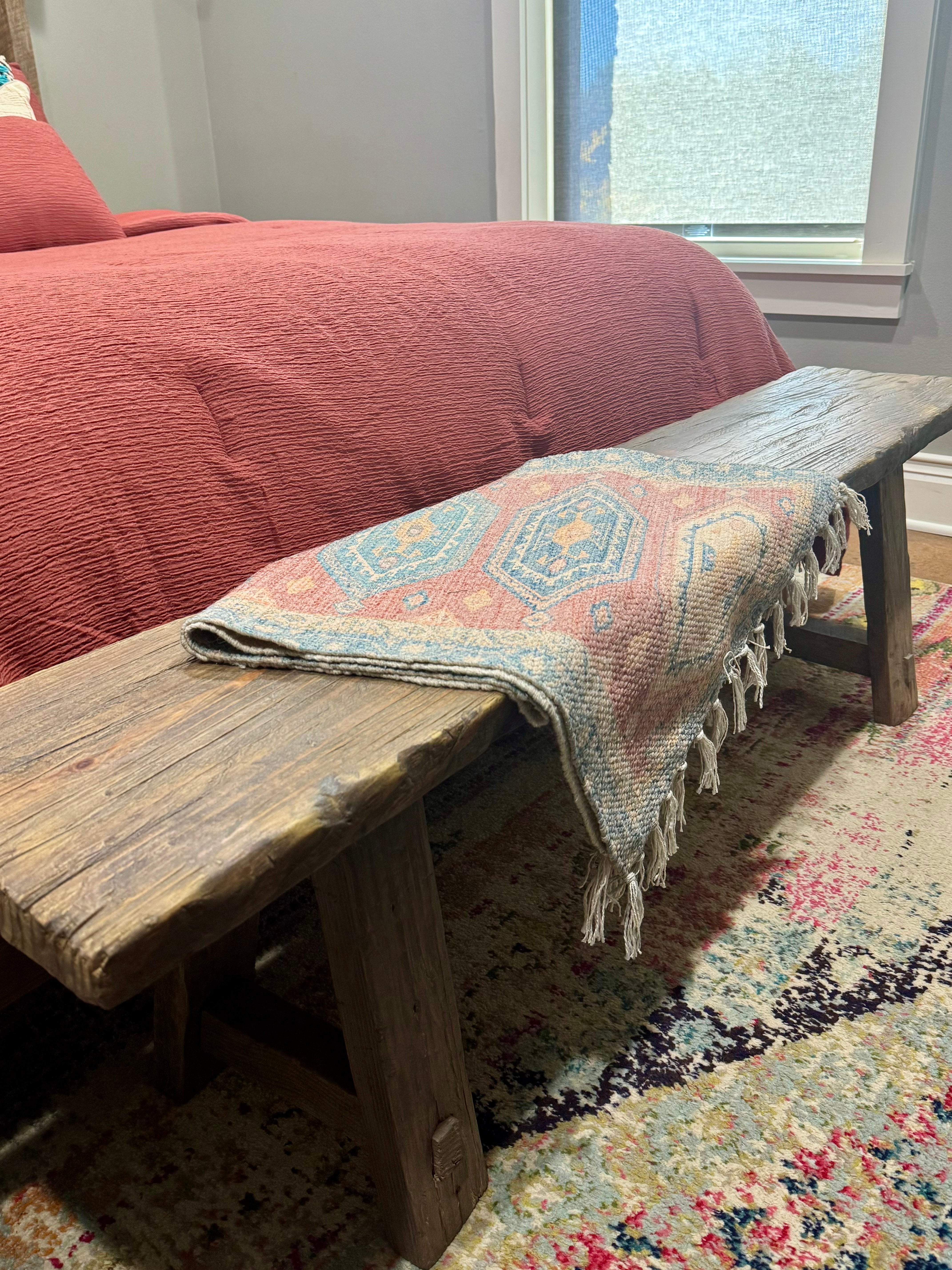
When I built this bench, I wasn’t trying to make new wood look old.
I was trying to create the kind of character, wear, and timeworn elegance that usually takes decades to develop naturally.
One of my favorite creative challenges is taking something brand new and making it feel like it has a story. Not a perfect story. Not a polished story. A story filled with dents, scratches, faded color, and the kind of imperfections that make a piece feel well loved.
The truth is there isn’t one right way to create age and character in wood.
For this project, I started by adding wear and texture to the wood before applying any finish. Instead of using specialty tools, I grabbed random tools and heavy objects from around the shop and started experimenting. The goal wasn’t to destroy the wood but to create the dents, dings, and imperfections that naturally happen over years of use.
Some marks were subtle, while others added deeper character. I wasn’t following a formula. I simply wanted to remove that brand-new appearance and give the bench the feeling that it had been around for a while.
One reason I enjoy projects like this so much is because many of my DIY adventures started the same way. I’d see something I loved, look at the price tag, and realize it wasn’t in my budget. Instead of giving up on the idea, I’d start asking myself, “Could I make something similar?” Sometimes the answer was yes. Sometimes it took a few attempts to get there. Either way, I learned something new in the process.
Next came the fun part—layering color.
Instead of using a single stain, I experimented with different tones to create depth and variation. Some areas received darker colors, while others picked up weathered gray tones. As the layers built up, the wood began to develop the kind of variation you often see in older pieces.
I also sanded portions of the finish back in selected areas. This helped reveal layers underneath and created even more depth and interest. Often it’s those little variations that make a piece feel authentic rather than manufactured.
One thing I’ve learned over the years is that some of the best finishes come from experimentation. Look around your workshop, garage, or backyard and you’ll probably find all sorts of objects that can create unique texture and character. Every project teaches something new, and sometimes the techniques that work best are the ones you discover by accident.
That’s why I always encourage others to try something new.
Whether you’re refinishing furniture, building a bench, painting a piece of decor, or tackling a project you’ve never attempted before, don’t be afraid to experiment. Every skill you have today was once something you didn’t know how to do.
We all start out as beginners.
Some of my favorite techniques have come from curiosity rather than instructions. A willingness to test, learn, and occasionally make mistakes has taught me far more than always playing it safe.
So if you’ve been wanting to try a new technique, build a project, or experiment with a finish, consider this your encouragement to go for it.
The goal isn’t perfection.
The goal is learning.
And sometimes, in the process of creating something new, you discover a style, technique, or skill that becomes part of your creative story.
What started as a new 2x12 leftover from a project became a bench with character, depth, and a story of its own—and that’s what makes the process so rewarding.